
Window Tinting Regulations in Georgia: Legal Limits and Practical Guide
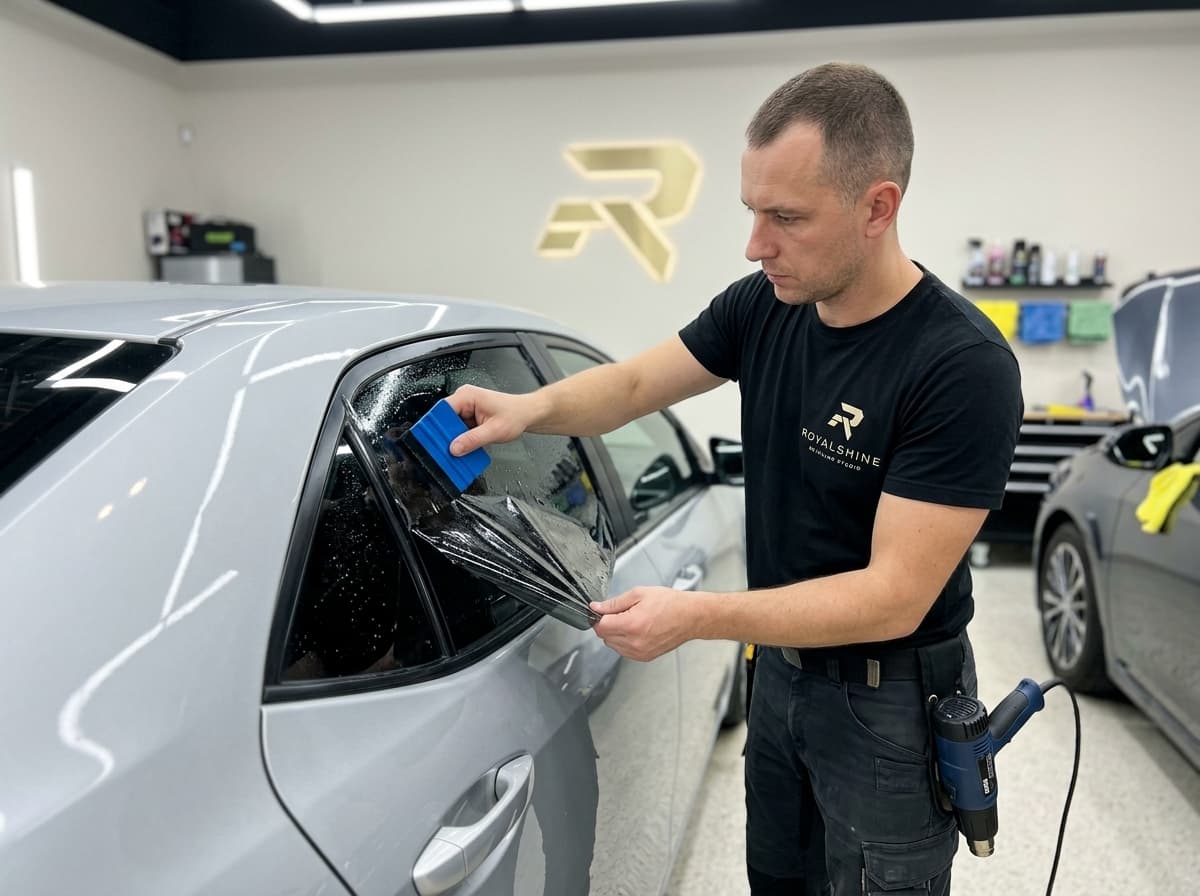
Exact Legal Tint Percentages in Georgia
Georgian legislation sets specific light transmission thresholds for motor vehicles. Violating these standards results in immediate administrative fines from traffic patrol and causes failure during mandatory technical inspection.
The percentage number refers to light transmission (VLT), which measures how much visible light passes through the glass:
| Glass Location | Permitted Tint Level | Minimum Light Transmission |
|---|---|---|
| Front Windshield | Top band only (up to 14 cm) | 75% overall (untinted) |
| Front Side Windows | Up to 40% tint | Minimum 60% transmission |
| Rear Side Windows | Up to 100% (full privacy) | No legal limit |
| Rear Windshield | Up to 100% (if side mirrors present) | No legal limit |
Important Patrol Note
Traffic patrol officers verify front window light transmission with calibrated photometers. Factory tinted glass often already blocks 5% to 10% of light, so choosing a film with 65% transmission keeps you comfortably within legal margins.
Fines and Technical Inspection Consequences
Operating a vehicle with darker than permitted front side windows incurs a 50 GEL fine upon first detection. Repeated violations within the same calendar year lead to increased penalties up to 100 GEL.
During annual technical inspection (PTI), testing stations check front glass transmission using precision meters. A non-compliant film results in an immediate failure status, requiring film removal and a re-test within 30 days.
Why Nano-Ceramic Film Outperforms Standard Dyed Tint
Many drivers assume darker film means better heat rejection. In reality, cheap dark dyed films only block visible light and turn purple over time while letting scorching infrared heat pass directly into your cabin.
High-grade nano-ceramic films contain microscopic ceramic particles that reflect up to 85% of infrared heat and block 99.9% of harmful UV rays. You can install an almost clear, fully legal 70% ceramic film on your front windows and still experience a drastically cooler interior during hot Tbilisi summers.
Key Takeaway
Proper window tinting is about heat rejection, optical clarity, and skin protection rather than just making glass dark. Choosing certified ceramic film guarantees full legal compliance while preserving interior leather from sun damage.
Interested in Legal Heat-Blocking Tinting?
We measure your glass before installation to ensure exact compliance with Georgian law.
More Related Guides
Ceramic Coating vs Paint Protection Film (PPF): Which Does Your Car Need?
A direct comparison between liquid ceramic coatings and polyurethane protective film. What each technology protects against, limitations, and the ultimate hybrid approach.
Why Standard Car Washes Ruin Paint: The Science of Three-Phase Detailing
Where those irritating circular swirl marks come from under direct sunlight. How proper pH-neutral pre-washes and dual-bucket contact cleaning keep clear coats scratch-free.