
Ceramic Coating vs Paint Protection Film (PPF): Which Does Your Car Need?
What Ceramic Coating Actually Delivers
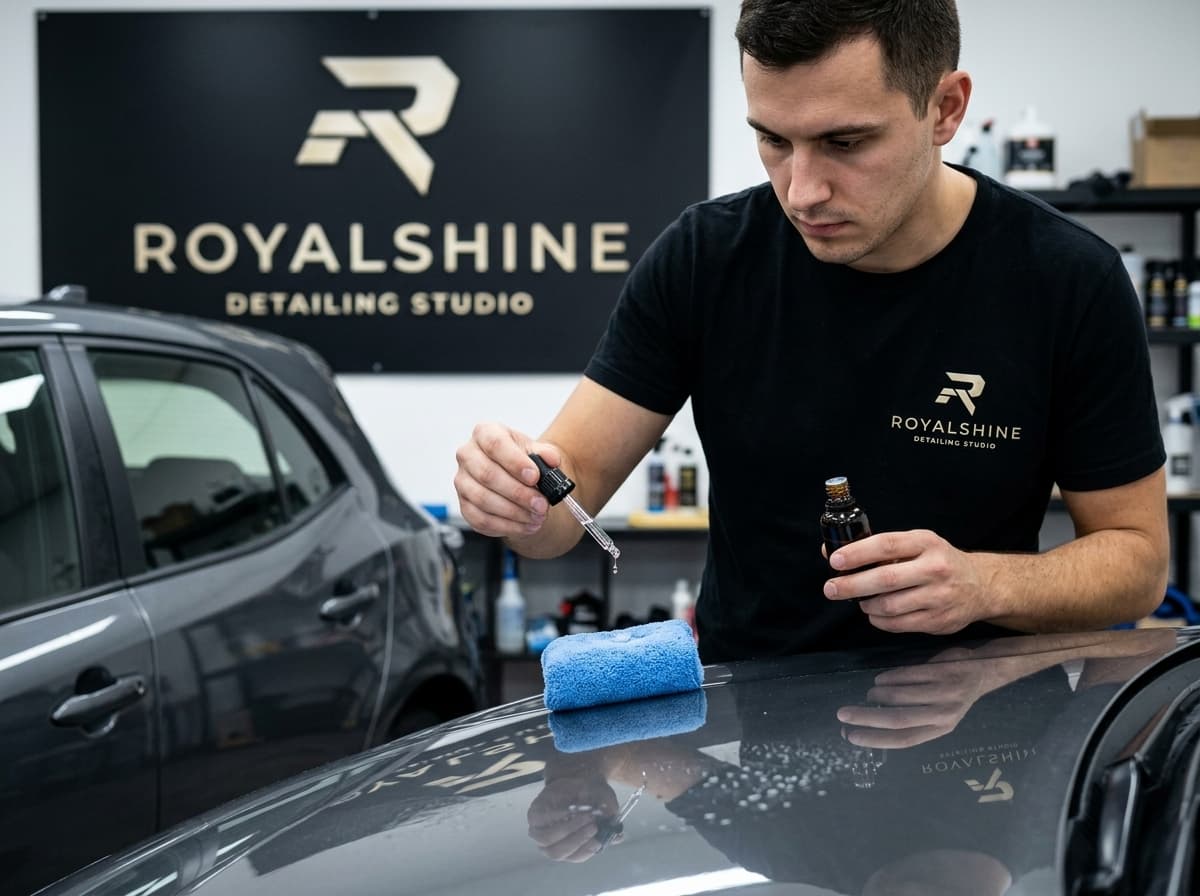
Ceramic coating is a liquid silica-based (SiO2) polymer applied by hand over properly polished paint. As it cures, it chemically bonds to the clear coat, creating a permanent hydrophobic protective layer measuring roughly 1 to 2 microns in thickness.
Its primary strengths are intense gloss enhancement, extreme hydrophobics (water and mud slide off effortlessly), and shielding against oxidation, chemical etching, bird droppings, and tree sap.
What Ceramic Cannot Do
Ceramic coating will not stop flying highway gravel, stone chips, shopping cart bumps, or deep key scratches. It is a chemical shield, not physical armor.
What Paint Protection Film (PPF) Provides
PPF is an optically clear, high-impact thermoplastic polyurethane film that is roughly 150 to 200 microns thick, roughly 100 times thicker than ceramic coating.
PPF is true physical armor. It absorbs the impact of highway gravel, protects against parking scrapes, and features an elastomeric topcoat that self-heals light scratches under warm sunlight or warm water.
Head-to-Head Comparison
Choosing between them depends on your driving habits, highway exposure, and vehicle budget:
| Factor | Ceramic Coating | Paint Protection Film (PPF) |
|---|---|---|
| Protection Type | Chemical & UV resistance | Physical impact & rock chips |
| Thickness | 1 to 2 microns | 150 to 200 microns |
| Gloss & Slickness | Maximum mirror depth | High clarity, self-healing |
| Gravel Resistance | None | Exceptional |
| Durability | 2 to 5 years | 7 to 10 years |
| Cost | Accessible | Higher investment |
Key Takeaway
The gold standard for automotive protection is the hybrid approach: install PPF on high-impact areas (front bumper, hood, headlights, mirrors) and apply ceramic coating over the entire body, including the film. This yields bulletproof stone protection up front and effortless washability everywhere else.
Protect Your Investment with RoyalShine
Get an honest consultation on clear coats and customized protection packages.
More Related Guides
Window Tinting Regulations in Georgia: Legal Limits and Practical Guide
Current legal tint percentages for front side, rear, and windshield glass in Georgia. How to stay compliant, pass periodic technical inspection, and keep your cabin cool.
Why Standard Car Washes Ruin Paint: The Science of Three-Phase Detailing
Where those irritating circular swirl marks come from under direct sunlight. How proper pH-neutral pre-washes and dual-bucket contact cleaning keep clear coats scratch-free.